Every Deaf patient deserves to be understood.
HandInCare gives Filipino healthcare workers real-time FSL translation, a clinical sign dictionary, and gamified learning — everything needed to communicate with and better serve Deaf patients, right from their phones.
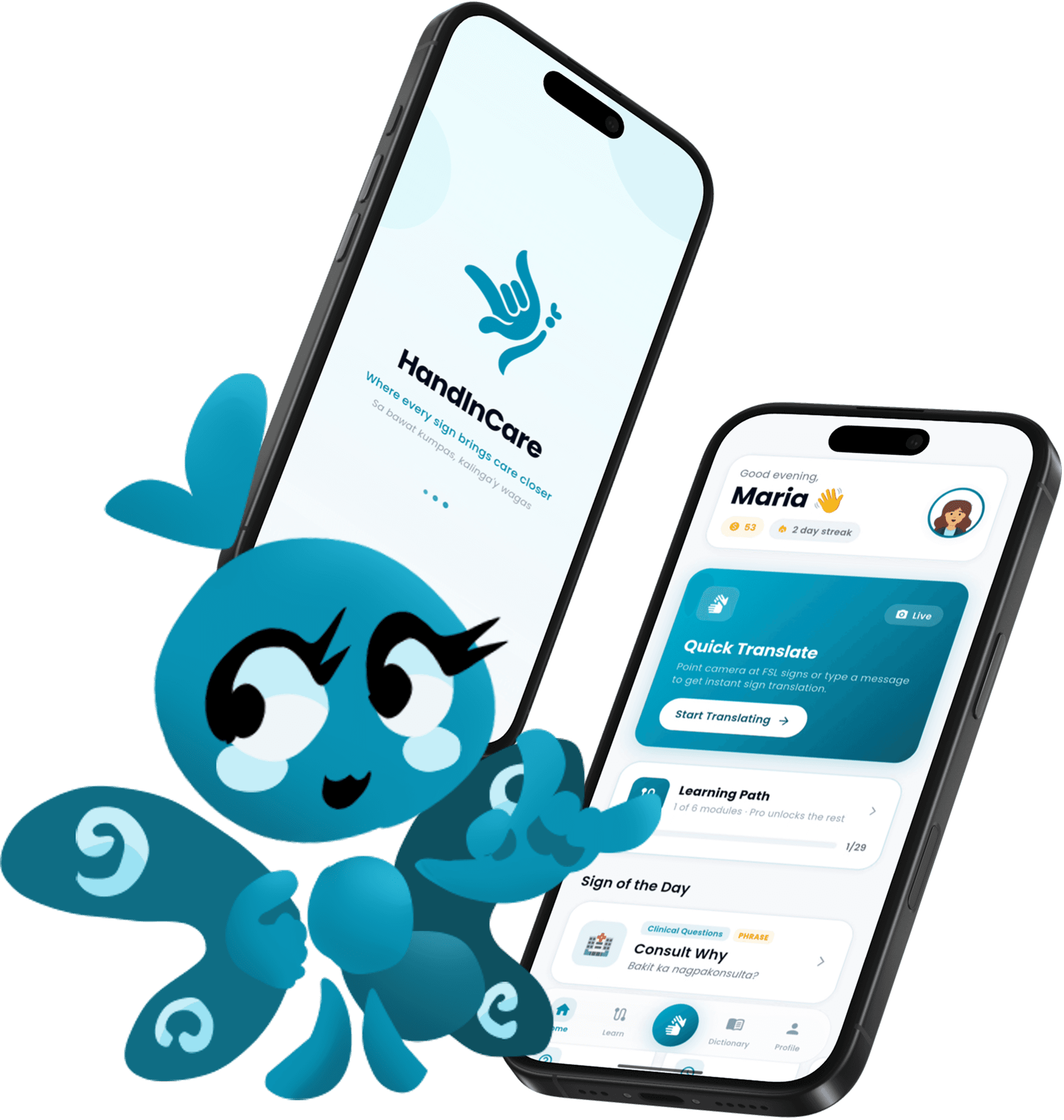
Deaf patients can't tell their doctors
what's wrong.
Philippine hospitals weren't designed for patients who communicate in sign language. That's a problem with real consequences.
Miscommunication in Consultations
When a patient can't explain their symptoms, doctors guess. That guessing can lead to wrong diagnoses — and real danger.
No FSL-Trained Staff
Less than 1% of healthcare workers in the Philippines know basic Filipino Sign Language. Interpreters are hard to find and expensive.
Existing Tools Don't Fit
Translation apps don't support sign language, and medical FSL phrase books are insufficient.
Isolation & Distrust
Deaf patients avoid hospitals because they've been misunderstood before. Healthcare becomes something to fear instead of trust.
How HandInCare Works.
A two-way FSL translator built for clinical conversations. It runs directly on your phone.
Detect Signs
Point your camera at a patient signing. HandInCare detects FSL phrases and reads them out in Filipino or English.
Real-time detectionGenerate Signs
Speak or type a phrase. A 3D avatar performs the FSL sign so patients can follow along.
3D Avatar PlaybackReference Dictionary
Browse clinical FSL phrases with step-by-step guides and 3D previews. Perfect for quick reference.
Growing libraryWhat HandInCare
does.
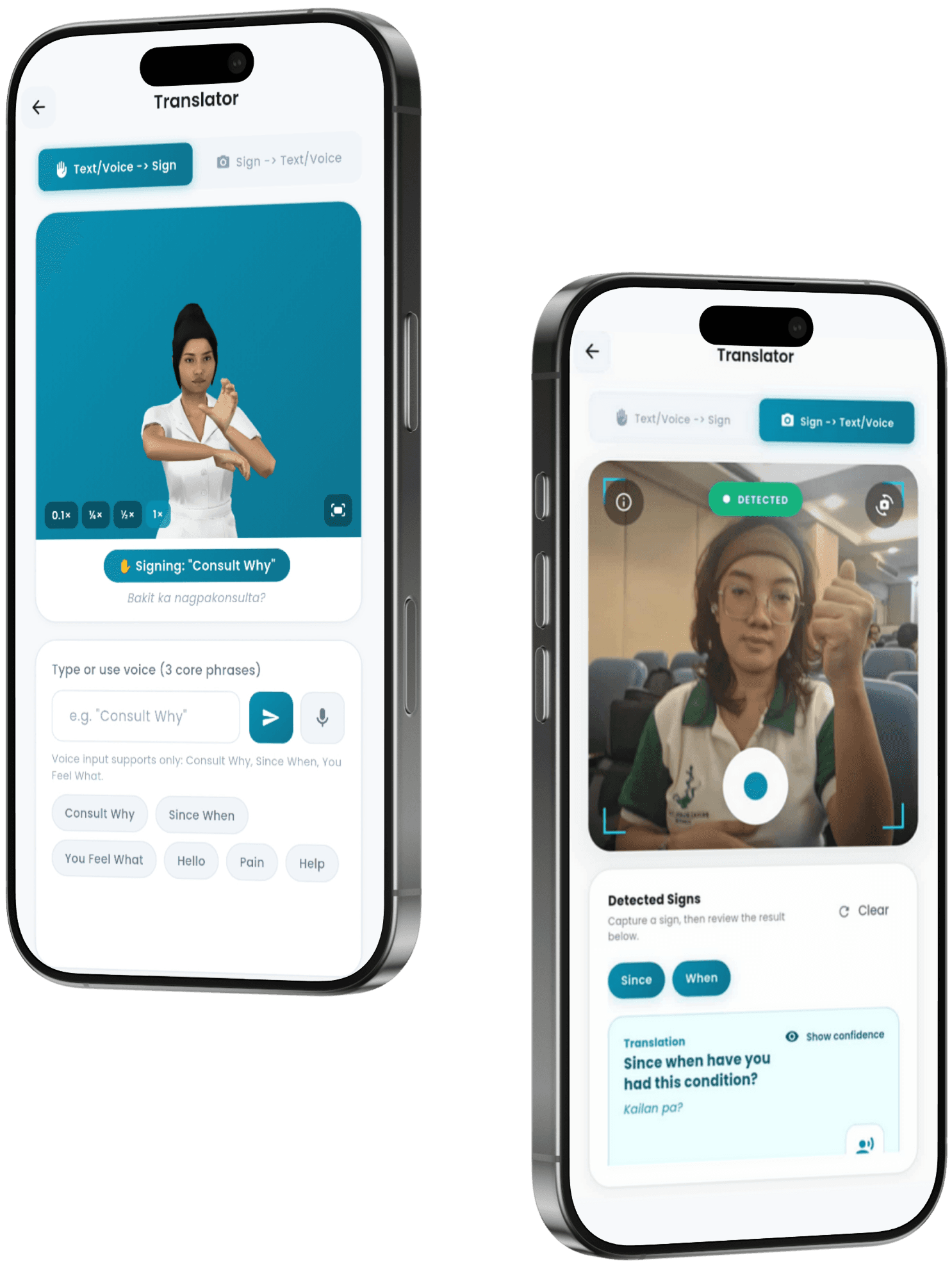
Two-Way Translator
Detect FSL phrases without internet access. Built for consultations and pain assessment in areas with poor connectivity.

3D Avatar Playback
Type or say a phrase, and a 3D avatar performs the FSL sign. Adjust the speed and camera angle so patients can follow clearly.
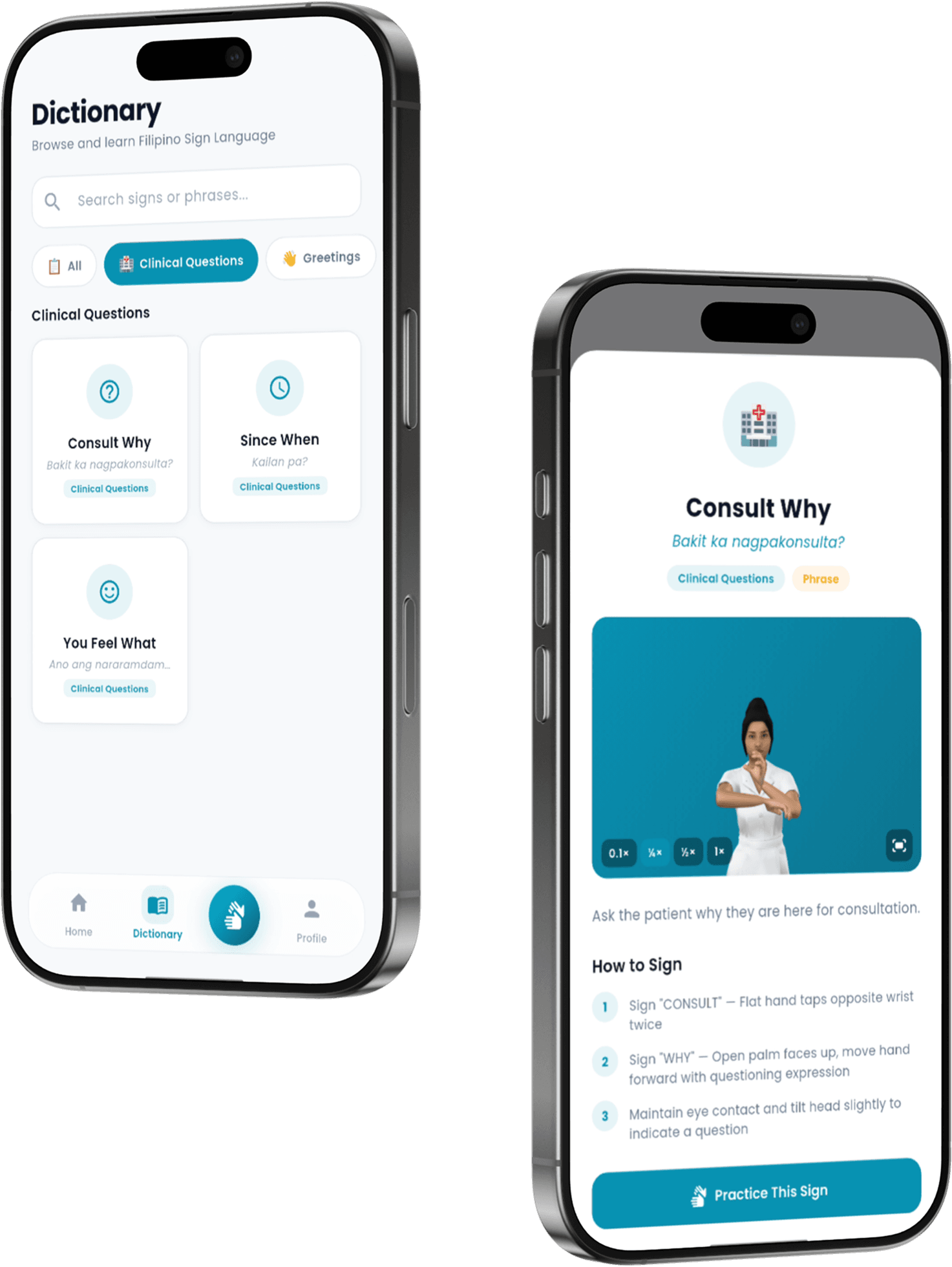
Sign Dictionary
Access a library of clinical FSL phrases. Each entry includes step-by-step guides, Filipino translations, and interactive 3D previews.
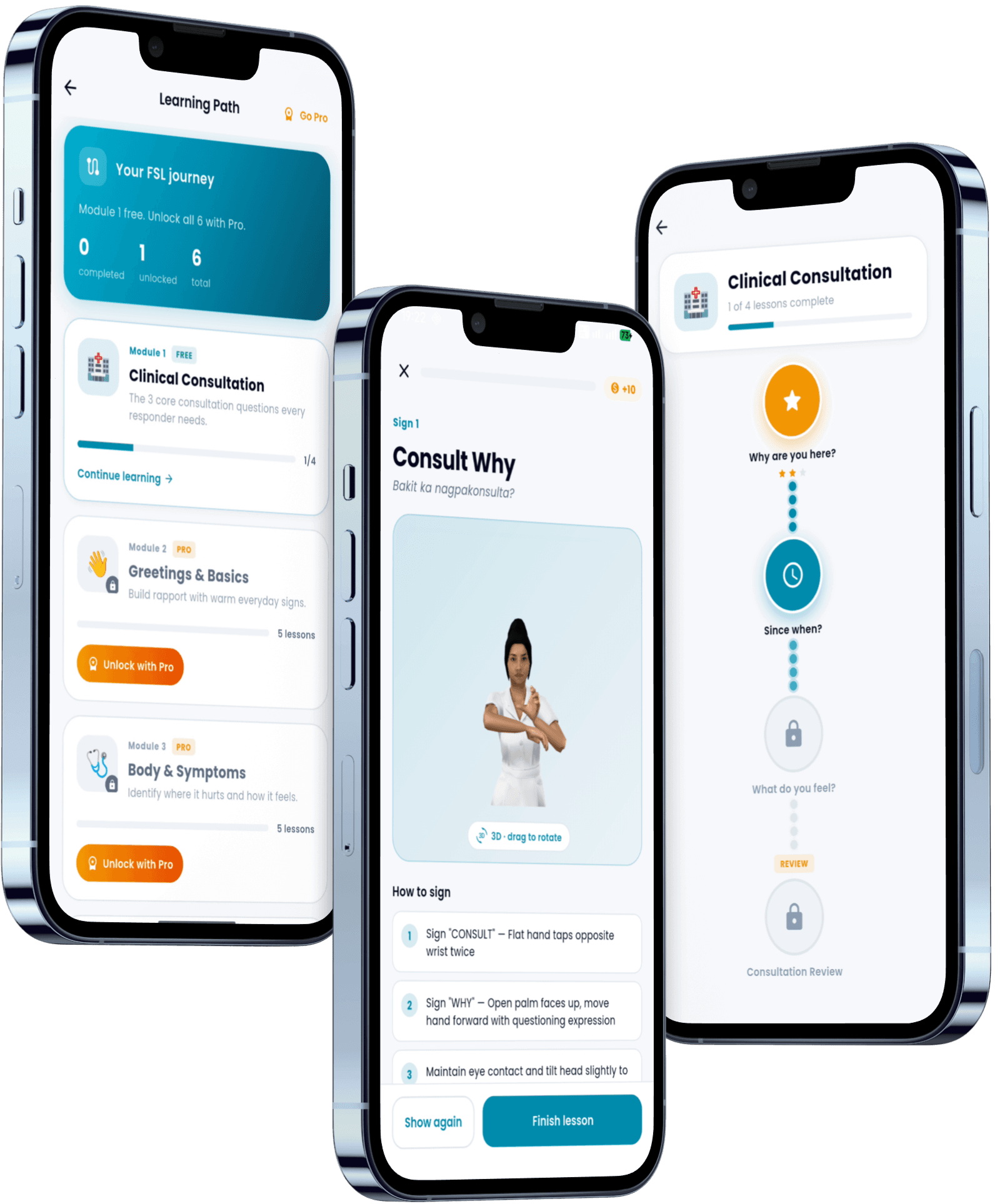
Structured Learning Path
FSL lessons organized by clinical context — consultation phrases, vital questions, pain assessment. Build real fluency through streaks and mastery badges without disrupting your workflow.
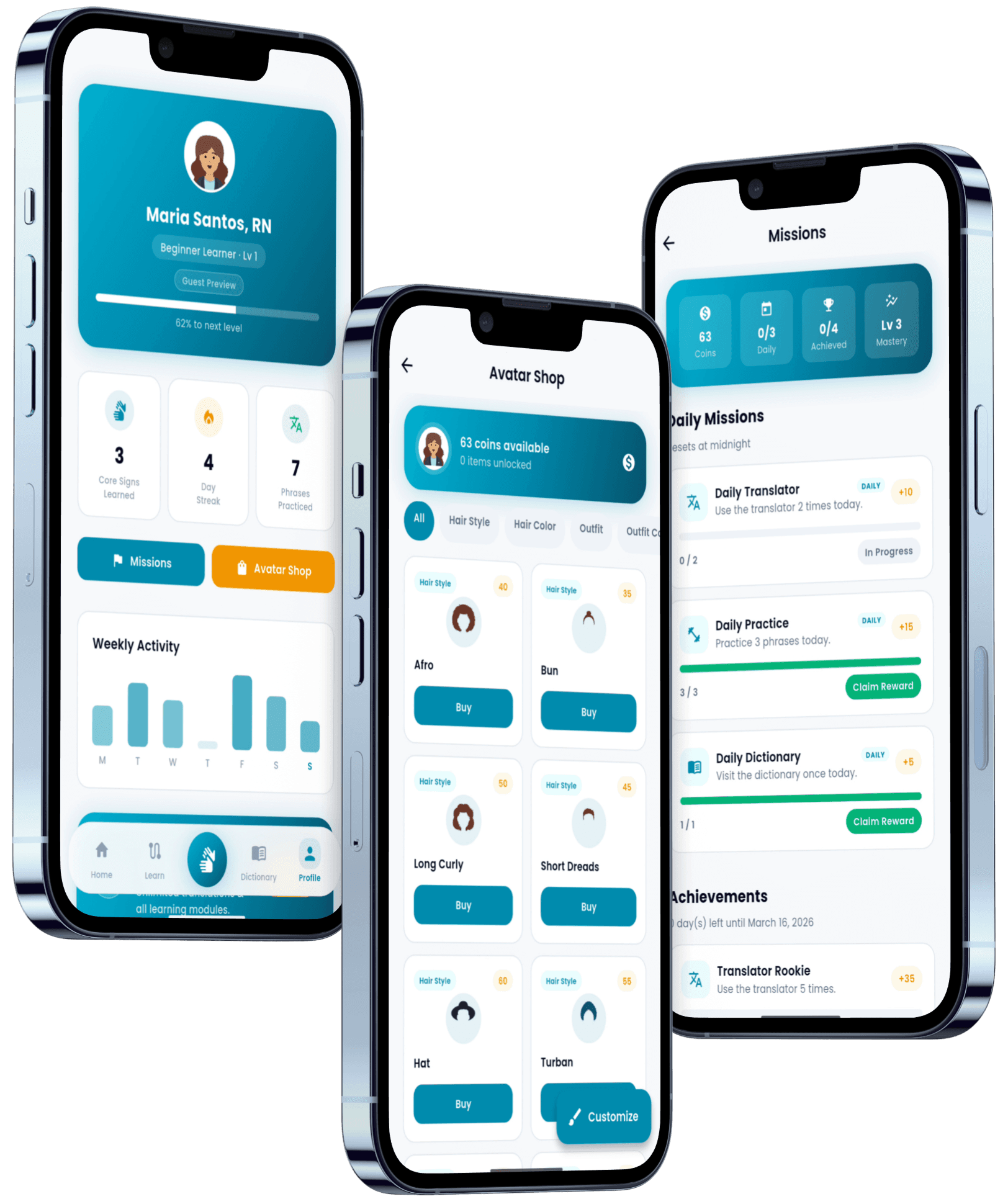
Gamification & Progress
Complete daily missions to build streaks and level up your mastery. Turn FSL learning into a consistent habit.
Where HandInCare fits in the bigger picture.
HandInCare PH supports five UN Sustainable Development Goals — because healthcare should work for everyone, not just those who can hear.
Good Health & Well-being
Giving 1.7M+ Deaf Filipinos a way to communicate in a clinic.
Reduced Inequalities
Removing the language wall that keeps Deaf patients from getting proper care.
Quality Education
Building a clinical FSL dictionary so healthcare workers can learn the signs they need.
Industry, Innovation & Infrastructure
Using on-device AI innovation to provide offline clinical translation.
Partnerships for the Goals
Collaborating with hospitals, LGUs, and universities for pilot testing and adoption.
Healthcare shouldn't depend
on whether you can hear.
We started with three phrases. The plan is to grow this into a full clinical communication tool — one phrase at a time, tested with real users along the way.
Deaf Filipinos who struggle to communicate in hospitals
SDG 10Healthcare workers who know basic FSL
SDG 4Core consultation phrases working today — more on the way
SDG 3On-device AI innovation for offline clinical settings
SDG 9Institutional partners (Hospitals, LGUs, Universities) targeted for pilot testing
SDG 17What early users are saying.
Real feedback from nurses and healthcare workers at Barangay Kasilawan who used HandInCare during our pilot.
“Maganda yung app kasi nakalimutan ko na yung sign language, busy din ako so wala na kong time sumali sa mga trainings and seminar.”
“Helpful siya, di kasi ako marunong mag sign language and meron tayo ritong mga Deaf residents.”
“Ang ganda nito kung mapatupad man 'to. Willing ako magbayad ng 150 to 200 monthly instead of having a one time seminar for sign language.”
Run HandInCare in your facility.
We are actively partnering with Barangay Health Centers, private hospitals, clinics, and nursing schools to launch our pilot programs. Join us in making healthcare communication inclusive.
Where we are and
what's next.
Prototype & Pilot
- 3 core consultation phrases
- On-device ML inference
- 3D avatar playback
- Gamification MVP
Expanded Vocabulary
- 20+ clinical phrases
- Category-based learning paths
- Voice input improvements
- Beta launch
Platform Growth
- Multi-device shared sessions
- Hospital pilot partnerships
- Offline phrase packs
- iOS release
Scale & Impact
- Open phrase contribution system
- Regional dialect support
- Government & NGO partnerships
- Nationwide deployment
The people behind HandInCare.

Ms.
Christel Louieji A. Peralta
Chief Executive Officer- 3rd Year BS Nursing
- Leads product vision and development

Mr.
Exequel B. Adizon
Chief Technology Officer- 4th Year BS Computer Science
- Oversees system architecture & core tech development

Ms.
Brianne Angela A. Pasia
Chief Operating Officer- 3rd Year BS Nursing
- Manages operations, workflow & coordination

Mr.
David Christian C. Olimberio
ML Engineer- 4th Year BS Computer Science
- Builds & trains the FSL recognition model

Ms.
Shaine D.G. Panaligan
Chief Marketing Officer- 3rd Year BS Nursing
- Leads marketing, outreach & partnerships
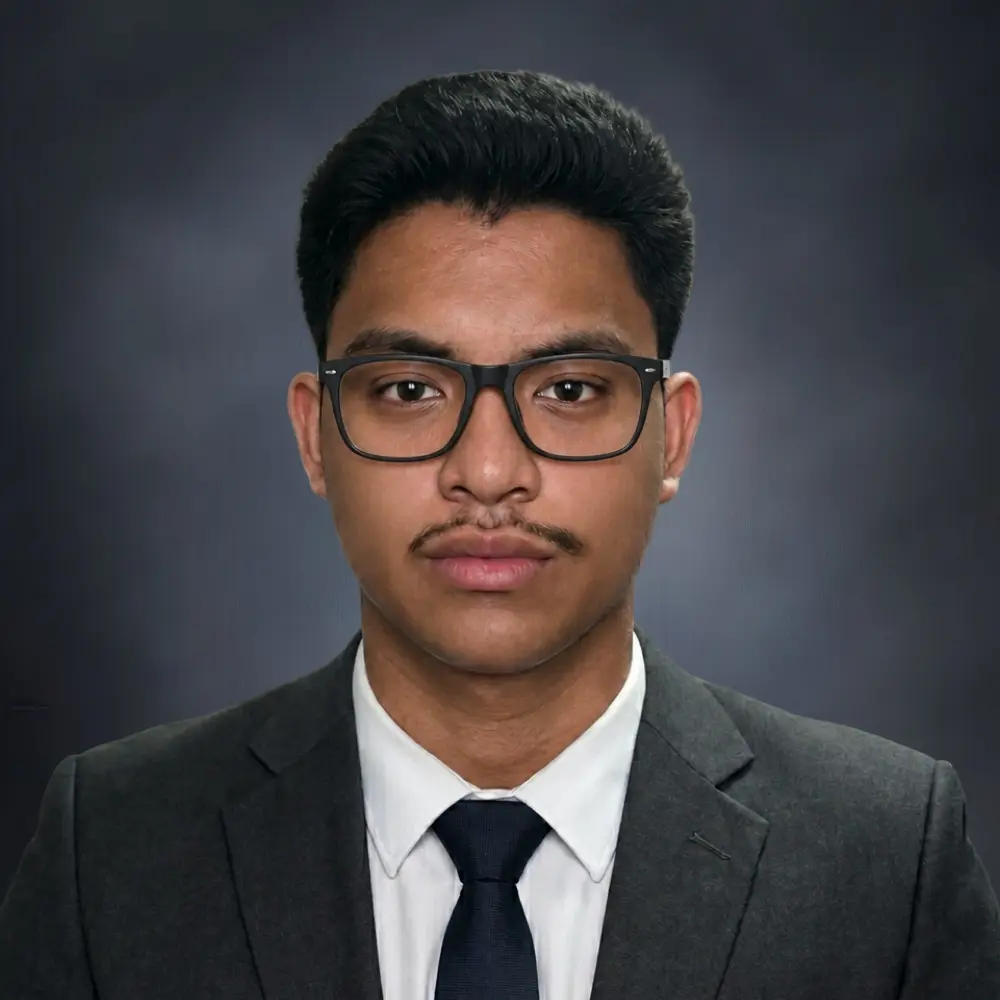
Mr.
Sebastian A. Baluyut
Art Director- 4th Year BS Computer Science
- Designs 3D avatars, app visuals & brand identity
Plans for everyone.
Whether you're learning independently or deploying across a hospital — there's a plan built for you.
FREE
First-time users
- Basic FSL healthcare phrases
- Limited translator access
- Beginner sign language lessons
- Daily practice exercises
MONTHLY
Casual learners & caregivers
- Full FSL healthcare translator
- Complete learning modules
- Personalized progress tracking
- Practice quizzes & activities
QUARTERLY
Regular learners
- Everything in Monthly
- Lower subscription cost
- Priority feature access
- Downloadable learning materials
ANNUALLY
Long-term users & students
- Everything in Quarterly
- Biggest savings
- Early access to new modules
- Certificate of course completion
- Premium support
All prices in Philippine Peso (₱). Institutional plans billed per seat.
Common questions.
Two ways to get started.
Whether you provide care or fund health projects, you can make an impact.
Just want to try it? Join the early access list.